Curriculum Vitae / Bio / Research / News
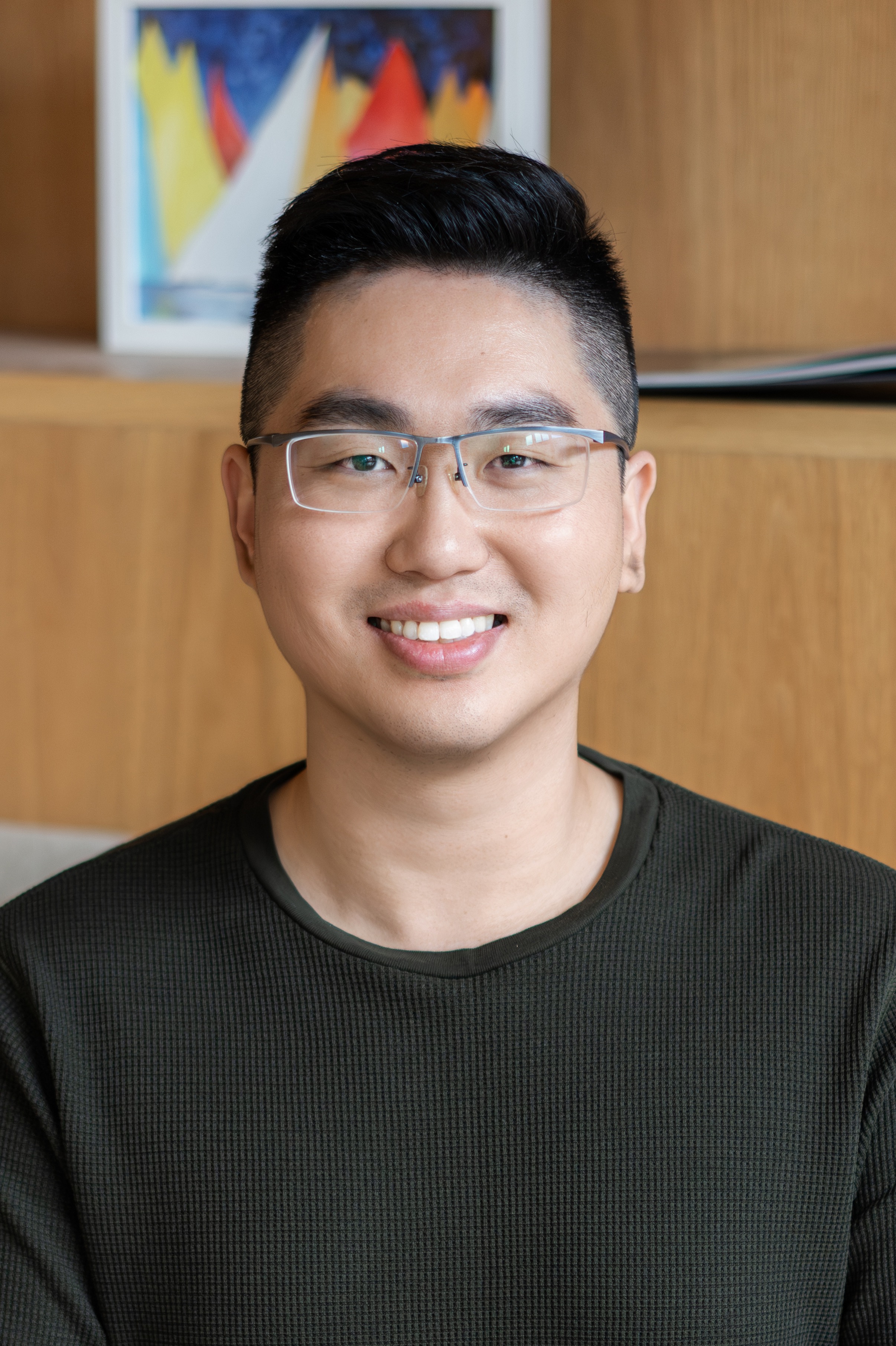
Xiang Ren (Sean Ren)
xiangren [at] usc.edu
Andrew and Erna Viterbi Early Career Chair
Associate Professor, USC Computer Science
Research Team Leader, USC ISI
Director, USC INK Research Lab
Co-founder, Sahara AI
Forbes' Asia 30 Under 30
MIT TR Innovator 35 (Asia Pacific)
I'm an Associate Professor in Computer Science and the Andrew and Erna Viterbi Early Career Chair at USC, where I direct the Intelligence and Knowledge Discovery (INK) Research Lab. I also hold an appointment as a Research Team Leader at the Information Sciences Institute (ISI) and am a member of the USC NLP Group and the USC Machine Learning Center. Outside of USC, I'm the co-founder of Sahara AI, where we build infrastructure for a decentralized, collaborative AI economy in which data and model contributors retain ownership and get credited. Previously I was a visiting research scientist at the Allen Institute for AI (AI2) and a Data Science Advisor at Snapchat. I received my PhD in computer science from UIUC, and spent time with the NLP group and the SNAP group at Stanford.
My research asks how we can make large language models (LLMs) reason reliably, understand and audit what they have learned, and work well with people. I develop learning algorithms, evaluation methods, and datasets that make LLM-based systems more trustworthy, more transparent, and cheaper to build, adapt, and maintain. Earlier in my career I worked on label-efficient information extraction, knowledge graphs, and commonsense reasoning; a summary of my PhD work on effort-light knowledge extraction is in the book "Mining Structures of Factual Knowledge from Text". Please check out our group website for more information.
Our research is funded by NSF (CAREER award, SciSIP #1829268), DARPA (MCS, KMASS, INCAS, SCORE, GAILA, SAIL-ON), IARPA (HIATUS, BETTER), and gifts from industry partners including Google, Amazon, Meta, JP Morgan, Adobe, Sony, Samsung, Okawa Foundation, and Snapchat.
Research Themes
The INK Lab's recent work (2023–2026) centers on four threads. Representative papers are linked; see Publications for the full list.
1. Understanding, auditing, and securing language models. We develop methods to see inside black-box and open models: forecasting and explaining what a model forgets during fine-tuning (ICML 2024 Spotlight, NeurIPS 2025), mechanistic accounts of task generalization (ICLR 2026), predicting model capabilities from limited evaluation (EMNLP 2023), and attributing model generations to pretraining data (ICLR 2025, COLM 2025). On the security side, we showed that API-protected LLMs leak proprietary information through their logits (COLM 2024), that every LM carries a forgery-resistant signature usable for model identification and provenance (ICLR 2026, 2026), and how to invert and backdoor instruction-tuned models, and evaluate defenses (NeurIPS 2025, NAACL 2024, EMNLP 2025). Most recently we study LLM agents that must learn the behavior of opaque tools through interaction (OpaqueToolsBench), the decision-support utility of agents in high-stakes domains (LATTICE), and verifiable guardrails for deployed agents (Proof-of-Guardrail, ICML 2026 AI4GOOD workshop), connecting to our broader interest in decentralized and accountable AI systems.
2. Human–AI interaction: explanations, reliance, and evaluation in the wild. We measure and improve how LLM outputs serve people: the human utility and pedagogical value of model explanations (ACL 2023, ACL 2025, ACL 2026), how models' reluctance to express uncertainty shapes human reliance (ACL 2024, NAACL 2025), evaluation of complex multi-turn and long-term conversations (Amulet, REALTALK, DRInQ), pluralistic and disagreeing preferences (ICML 2025), cultural perception in LMs (COLM 2024), and large-scale real-world interaction data such as WildChat (ICLR 2024) and WildVis.
3. Reasoning and inference-time computation in LLMs. We study when chain-of-thought reasoning is faithful versus memorized, and how to make reasoning both more reliable and more efficient. This includes self-consistent chain-of-thought distillation (SCOTT, ACL 2023 Outstanding Paper), diagnosing memorization in reasoning traces (EMNLP 2025), stress-testing and improving rule-following with logic scaffolding and symbolic working memory (ACL 2024, EMNLP 2024), inference-time search and expert mixing for reasoning (EMNLP 2025a, EMNLP 2025b), self-composed reasoning structures (Self-Discover, NeurIPS 2024), and post-training for reasoning via trajectory-level exploration in RL with verifiable rewards and segment-level selective learning of long reasoning traces (ICLR 2026a, ICLR 2026b).
News
- 8/ 2026 - New preprint WhiteMatter: all-to-all cross-layer connections for Transformers via KV mixing.
- 7/ 2026 - INK Lab presented two papers at ACL 2026: DRInQ on conversational implicature and Believing without Seeing on contextualizing VLM explanations.
- 7/ 2026 - Proof-of-Guardrail in AI Agents presented at the AI4GOOD workshop at ICML 2026.
- 6/ 2026 - Two new preprints: Token Rankings are Unforgeable Language Model Signatures and Translating the Untranslatable.
- 4/ 2026 - INK Lab presented four papers at ICLR 2026 on RL with verifiable rewards, selective learning of reasoning traces, forgery-resistant model signatures, and mechanistic interpretability of task generalization.
- 4/ 2026 - New preprint LATTICE: evaluating the decision-support utility of crypto agents.
- 2/ 2026 - New preprints on learning opaque tool behavior through interaction (OpaqueToolsBench) and hierarchical error evaluation for dialogue summaries (DIAL-SUMMER).
- 1/ 2026 - Four INK Lab papers accepted to ICLR 2026.
- 12/ 2025 - INK Lab presented two papers at NeurIPS 2025: better language model inversion and demystifying language model forgetting.
- 12/ 2025 - Invited to talk at NASDAQ TradeTalk about proactive AI policy that balances national security, consumer privacy, governance, and economics.
- 11/ 2025 - INK Lab published 6 papers at EMNLP 2025, covering research on LLM reasoning and planning, chain-of-thought faithfulness, memorization and safety diagnostics, and efficient inference-time methods.
- 10/ 2025 - Spoke at Pantera Summit 2025 on "Blockchain in the Age of AI."
- 10/ 2025 - Two INK Lab papers at COLM 2025 on membership inference with n-gram coverage and diverging annotator preferences (with ICML 2025).
- 9/ 2025 - Appeared on The AI Forecast podcast: "The AI Ownership Crisis".
- 8/ 2025 - Gave a talk at Berkeley RDI summit on The Convergence of AI and Web3.
- 8/ 2025 - Discussed at a panel at Berkeley SBC on decentralized AI.
- 7/ 2025 - INK Lab papers at ACL 2025 (ELI-Why) and ICML 2025 (Diverging Preferences).
- 5/ 2025 - At ICLR 2025, INK Lab presented research on principled reasoning mechanisms, generalization and alignment in LLMs, and addressing training–inference mismatch for reliable deployment.
- 5/ 2025 - Joined Chi Wang (AG2) and Raj Ammanabrolu (UCSD) at Sahara AI AMA (X Spaces): to discuss topics related to the AI Agent Takeover.
- 4/ 2025 - Two INK Lab papers at NAACL 2025: CAVE on controllable authorship-verification explanations and Rel-A.I. on measuring human–LM reliance.
- 3/ 2025 - Spoke at a panel at Stanford BASS Denver on AI and Real Data.
- 2/ 2025 - Talk about Why We Should Create a Collaborative AI Economy That Benefits Everyone at a podcast.
- 12/ 2024 - INK Lab published papers at NeurIPS 2024 on self-composed reasoning structures (Self-Discover) and stress-testing long-context models (Lifelong ICL / Task Haystack).
- 11/ 2024 - Appeared on the Tech People podcast: "Blockchain and AI: A Secure and Transparent Future."
- 11/ 2024 - INK Lab papers at EMNLP 2024 on long-tail knowledge generation, symbolic working memory for rule application, and WildVis (demo).
- 10/ 2024 - INK Lab papers at COLM 2024 examined the foundations of large language models, including cultural perception in LMs and what API-protected LLMs leak through their logits.
- 9/ 2024 - Appeared on Alumni Ventures' Tech Optimist podcast (#47) discussing Sahara AI and data ownership.
- 8/ 2024 - INK Lab had multiple papers at ACL 2024, covering LLM reasoning and rule-following, explainability and faithfulness, robustness and safety, and evaluation in real-world settings.
- 8/ 2024 - Spoke at WebX 2024 (Tokyo) as a featured speaker.
- 8/ 2024 - Media including Bloomberg and Reuters cover the $43M fundraise of Sahara AI, a company that builds infrastructure for a decentralized AI economy.
- 7/ 2024 - At ICML 2024, INK Lab presented What Will My Model Forget? (Spotlight).
- 6/ 2024 - INK Lab papers at NAACL 2024 on virtual prompt injection and instruction-following evaluation.
- 5/ 2024 - INK Lab presented at ICLR 2024 on WildChat, PlaSma, multi-reward rationale distillation, and inductive reasoning with hypothesis refinement.
- 2/ 2024 - Our paper "Personalized entity recommendation: a heterogeneous information network approach" (WSDM 2014) received the Test of Time Award at WSDM 2024!
- 11/ 2023 - Thrilled to receive the 2023 Samsung AI Researcher of the Year!
- 11/ 2023 - Thrilled to be named as MIT Technology Review Innovators Under 35 (Asia Pacific)!
- 8/ 2023 - Thrilled to be one of the seven awardees for the 2023 Okawa Research Grant!
- 6/ 2023 - Thrilled that our paper "SCOTT: Self-Consistent Chain-of-Thought Distillation" receives the 2023 ACL Outstanding Paper Award!
- 3/ 2023 - INK lab has 11 papers accepted to ACL 2023 conference, covering topics on LLM reasoning, explainability, and inference efficiency.
- 12/ 2022 - Our paper on Grounded Planning for Embodied Tasks with Language Models is accepted to AAAI 2023!
- 11/ 2022 - Talked about commonsense reasoning challenges for LLM at the UPenn NLP seminar
- 10/ 2022 - Talked about evaluation methods for commonsense reasoning at the HiTZ (Basque Center for Language Technology). Video can be found here
- 9/ 2022 - I'm honored to be appointed as the Andrew and Erna Viterbi Early Career Chair at USC.
- 7/ 2022 - Our paper NewsEdits, led by Alexander, won an Outstanding Paper Award at NAACL 2022 for its contribution to best resource.
- 5/ 2022 - Serve as senior area chair for EMNLP 2022 on commonsense reasoning
- 4/ 2022 - Excited to be selected as a Google Research Scholar.
- 4/ 2022 - Start part time as a visiting research scientist at AI2.
- 2/ 2022 - Gave a talk at AI2 about commonsense reasoning in the wild. Check out slides for our recent work.
- 12/ 2021 - Chenguang, Yuchen, Yicong, Meng, Wenhao and I will be giving a tutorial "Knowledge-Augmented Methods for Natural Language Processing" at ACL 2022.
- 12/ 2021 - Excited to start a collaborative project on bias mitigation of NLP models supported by a Facebook Research Award.
- 11/ 2021 - Excited to co-organize three workshops in 2022 *CL conferences: Workshop on Commonsense Representation and Reasoning and FL4NLP at ACL 2022, and DeepLo at NAACL 2022
- 10/ 2021 - I will serve as an action editor (area chair) for ACL Rolling Review.
- 09/ 2021 - INK lab has 3 papers accepted at NeurIPS 2021 (one spotlight, two posters), presenting new results on explanation-based learning for NLP and continual learning.
- 08/ 2021 - INK lab has 9 papers accepted at EMNLP 2021 and 3 papers accepted to Findings of EMNLP. Congratulations to all authors!
- 07/ 2021 - Our lab received a research award from USC + Amazon Center on Secure and Trusted Machine Learning to work on federated learning for NLP -- media coverage by Amazon and USC.
- 07/ 2021 - Serve as area chair for EMNLP 2021, ICLR 2022, and AAAI 2022.
- 06/ 2021 - USC covers our K-12 outreach activities on explaining to high school kids how AI can be applied to help combat online hate speech.
- 06/ 2021 - Congratulations to Dongho, Ravi and the other authors for their paper "AutoTriggER: Named Entity Recognition with Auxiliary Trigger Extraction" winning the Best Paper Award at NAACL TrustNLP workshop!
- 05/ 2021 - INK lab has 7 papers accepted to ACL 2021 and its findings, spanning over analysis of language models regarding common sense, question answering, and explanation-based learning.
- 04/ 2021 - Our group won a NSF CAREER award to support the work on teaching machine through human explanations.
- 04/ 2021 - Our work on probing languages models (NumerSense) and knowledge-aware graph networks (KagNet) got covered by Communications of the ACM.
- 03/ 2021 - INK lab has 4 papers accepted at NAACL 2021, with topics spanning over bias mitigation, open-ended commonsense reasoning, and cross-lingual learning
- 01/ 2021 - Check out our new papers on pre-training for concept-centric common sense and deceiving knowledge graph-augmented models; both accepted to ICLR 2021.
- 11/ 2020 - Our EMNLP work CommonGen and NumerSense got covered by Tech Xplore, EurekAlert and ScienceDaily.
- 09/ 2020 - INK lab has 12 papers accepted to EMNLP 2020 (7 to the main conference and 5 to Findings of EMNLP).
- 07/ 2020 - Our ACL work on examining and reducing biases in hate speech detection algorithms is featured by Digital Trends, ScienceDaily, and USC Viterbi.
- May, 2020 - Our paper "NERO: A Neural Rule Grounding Framework for Label Efficient Relation Extraction" received Best Paper Award Runner-up at The Web Conference 2020!
- Mar, 2020 - Excited to receive a Sony Faculty Research Award to support our work on learning from natural language explanations.
- Sep, 2019 - Excited to receive a data science research award from Adobe Research to work on neural symbolic learning for recommendation.
- Mar, 2019 - Excited to receive a Google Faculty Award for supporting our research on explainable recommendation.
- Mar, 2019 - Our research on interpretable knowledge reasoning is funded by JP Morgan AI Research Award.
- Feb, 2019 - As part of the USC/ISI team, we received DARPA award to work on Machine Commonsense and Learning with Less Data.
- Jan, 2019 - Our research on neural-symbolic deep learning for NLP is funded by an Amazon Research Award.
Talks
- Upcoming:
- Previous:
- The API Privacy Paradox: How LLM APIs Unintentionally Reveal Model Details, 2025. Seoul National University; Berkeley RDI; Google; Stanford [Talk].
- Blockchain in the Age of AI, 2025. Panel at Pantera Summit 2025 [Talk].
- The Convergence of AI and Web3, 2025. Invited talk at UC Berkeley RDI 3rd Annual Summit on Responsible Decentralized Intelligence [Talk].
- AI in 2025 and Beyond, 2025. Sahara AI AMA (X Spaces) [recording].
- Decentralized Intelligence and AI Ownership, 2024. Panel at AI All Summit Singapore [Talk].
- Responsible Decentralized Intelligence, 2024. Panelist at UC Berkeley RDI Summit [event].
- Reflex or Reflect: When Do Language Tasks Need Slow Reasoning? [slides], 2023. @UCSD AI seminar, SoCal NLP Symposium, ACL Workshop on Narrative Understanding; World Young Leader Institute Forum
- Commonsense Reasoning in the Wild, 2022 [slides]. Invited talk at HiTZ Basque Center for Language Technology (video) AI2; UPenn NLP Seminar; AKBC CSR Workshop; Intel AI Lab.
- Teaching Machines through Human Explanations [slides], 2021. Invited talks @UIUC, Amazon Alexa AI.
- Applying AI for Fighting Online Hate Speech [slides], 2021. @USC Viterbi SHINE, STEM Academy Hollywood
- Fast and Faithful Knowledge Graph Construction [video], 2020. @Pinterest Knowledge Graph summit
- Commonsense Reasoning: Models and New Challenges [slides], 2020. @Google X
- Fast Learning with Explanation and Prior Knowledge [slides], 2020. @CMU LTI seminar, UT Austin
- From Data to Model Programming: Injecting Structured Priors for Knowledge Extraction [slides], 2019. Invited talks @Stanford NLP seminar, IBM Research seminar, Bloomberg, JP Morgan
- Effort-Light StructMine: Turning Massive Text Corpora into Structures [video], 2018
- Scalable Construction and Reasoning of Massive Knowledge Bases [slides], 2018
Tutorials
- LLM-driven Instruction Following: Progresses and Concerns. EMNLP 2023 tutorial (with Wenpeng Yin, Qinyuan Ye, Pengfei Liu, Hinrich Schütze).
- Knowledge-Augmented Methods for Natural Language Processing. ACL 2022 and WSDM 2023 tutorials (with Chenguang Zhu, Yichong Xu, Bill Yuchen Lin, Meng Jiang, Wenhao Yu).
- Scalable Construction and Reasoning of Massive Knowledge Bases. WWW 2017, SIGMOD 2017, CIKM 2017 and SIGMOD 2016 tutorials [slides].
Teaching
- Fall 2026: Applied Natural Language Processing (CSCI 544)
- Spring 2026: Advanced Natural Language Processing (CSCI 662, PhD seminar)
- Spring 2026: Natural Language Processing (CSCI 444)
- Spring 2022: Deep Learning and Its Applications (CSCI 566)
- Fall 2020-2021: Representation Learning for NLP
- Fall 2019: Advanced Topics in Representation Learning for NLP (CSCI 699)
- Spring 2019: Machine Learning for Knowledge Extraction and Reasoning (CSCI 699)
- Fall 2018: Introduction to Information Extraction
Awards
- ACM WSDM Test of Time Award, 2024
- Samsung AI Researcher of the Year, 2023
- MIT Tech Review Innovator 35 (Asia Pacific), 2023
- ACL Outstanding Paper Award, 2023
- Okawa Research Award, 2023
- NAACL Outstanding Paper Award, 2022
- Google Research Scholar, 2022
- Andrew and Erna Viterbi Early Career Chair, 2022
- Facebook Sponsored Research Award, 2021
- NSF CAREER Award, 2021
- Amazon Secure and Trusted ML Grant, 2021
- Best Paper Award, TrustNLP @NAACL 2021
- Sony Faculty Innovation Award, 2020
- Best paper award runner-up, The Web Conference 2020
- Forbes' Asia 30 Under 30, Healthcare & Science, 2019
- JP Morgan AI Research Award, 2019
- Amazon Faculty Research Award, 2019
- Adobe Data Science Research Award, 2019
- Google Faculty Research Award, 2018
- ACM SIGKDD Doctoral Dissertation Award, 2018
- David J. Kuck Outstanding Thesis Award, 2017
- Google PhD Fellowship, 2016
Services
- K-12 Outreach: Guest lecture @USC Viterbi SHINE program (07/ 2020); guest lecture & project pitch panel @Theodore Roosevelt High School, Los Angeles (02/ 2021); project feedback @STEM Academy Hollywood (03/ 2021). Media coverage by USC.
- Appointed chair: ACM SIGKDD Information Director
- Organizer: CSRR@ACL 2022, FL4NLP@ACL 2022, DeepLo@NAACL 2022, TrustworthyNLP@NAACL 2020, LLD@ICLR 2019, RepL4NLP@ACL 2019, DeepLo@EMNLP 2019, KBCOM 2018
- Co-chair: KDD 2019/2020 Media and Publicity Co-chair, SDM 2020 Publicity Co-chair, AKBC 2019 workshop Co-chair, ICDM 2018 Data Challenge co-chair
- Senior Area Chair / Area Chair: ACL Rolling Review (action editor), EMNLP 2022 (SAC), ICLR 2022, AAAI 2022, EMNLP 2021, NAACL 2021, IJCAI 2021, AAAI 2021 (SAC), ICLR 2021, ACL 2020, EMNLP 2020, ACL 2019, EMNLP 2019, EMNLP 2018, COLING 2018
- PC/Reviewer: KDD (2015-present), ACL (2017-present), NeurIPS (2018-present), ICML (2018-present), ICLR, COLM, WWW (2017-present), WSDM (2017-present), TACL, TKDE, TKDD, TIST
Contact
Prospective students I'm actively recruiting graduate students who are excited about doing fun research on LLM reasoning, model understanding and security, human–AI interaction, and AI agents. Please check out this page for more information before emailing me. I may not be able to respond to your email.